-
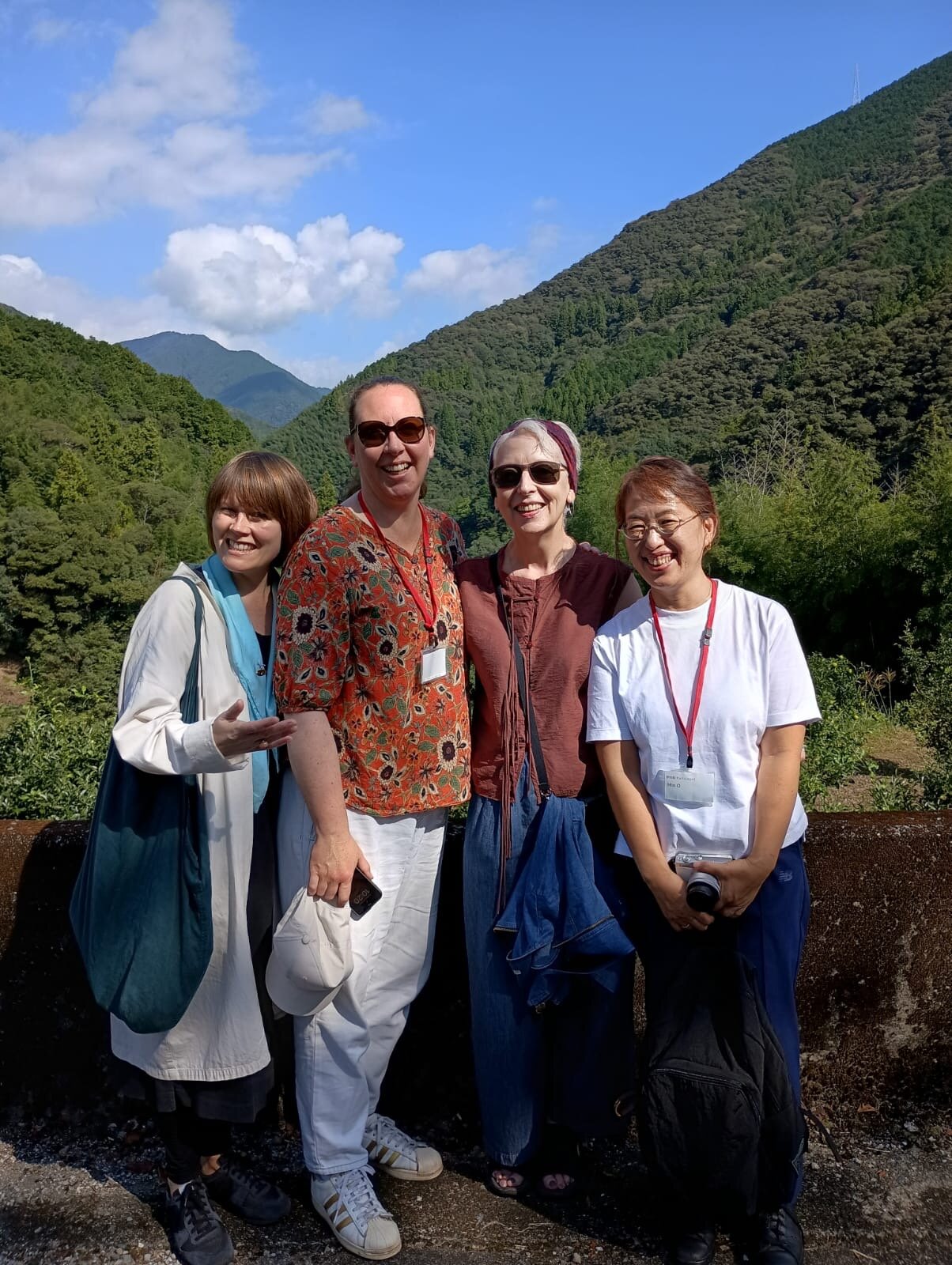
Feedback interview between workshop participants Lucy May Schofield, Mia O and Natasha Norman.
Date of conversation: 5 November 2025
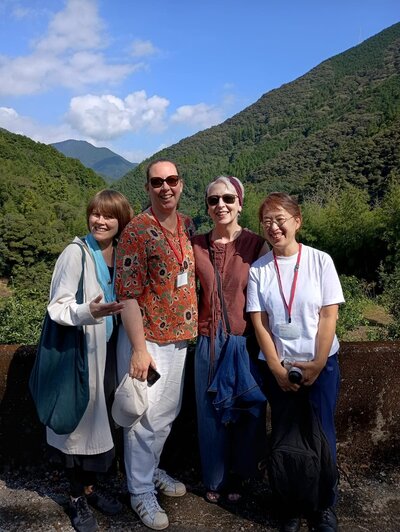
Natasha Norman
What was the thing that struck you when you got home? What were your first thoughts when considering what you had experienced during the workshop
Mia O
Well, after the workshop, I looked through the washi I have in my storage. Luckily, Shimizu-san from Echizen explained everything about their washi very openly, even sharing their future plans to grow kozo. That made me appreciate their transparency. At the same time, I've been wondering if I could reach out to the Saitama washi maker to ask more about her process and materials -- I'm not sure if it would be polite or not, but I'd really like to learn more. From now on, I think I need to review what I learned in this workshop before buying washi, so I can better support the makers who work hard to produce high-quality paper and preserve traditional methods. It's also something that benefits the environment.
Natasha Norman
I feel that I've got so much information now, it's made buying paper more complex. Because now I have all these questions to ask, but perhaps there isn't the space to ask them in the paper buying process?
Lucy May Schofield
I returned home and started looking at stockists of Washi in the UK to compare the different information they provide. For instance, how much information do they give on the cooking process, on whether it's domestic Japanese kozo or imported kozo, the fibre content, the bleaching method, the drying technique. There's only one stockist I use in the UK that have this detail but it's very little information, there's big gaps in their knowledge and the information is inconsistent. Equally, I felt really, really lucky to have ordered the Udatsu Washi and picked it up there because we know everything about that Washi. They are very transparent and we've developed a good relationship with them. But, Mia, I feel the same. I want to contact the paper merchants and ask what are the qualities and conditions of this Washi? But I don't think that they will know. The whole tour has made me more conscious of buying washi. Now I want to consider the prefecture, the cooking methods, whether it's domestically or internationally imported kozo, how it's cooked, dried, grown, all of these things seem more vital now. Just to know about these elements and then make a considered choice.
Natasha Norman
And do you think that knowledge, besides making you a much more discerning buyer, do you think that knowledge is also going to impact your washi choices for specific artistic projects?
Lucy May Schofield
It will definitely make me a better teacher because now I feel able to explain more about Washi to my students and explain the complexities of all the different varieties and all the different qualities that you need to take into account. But even with all that information, there's still a massive problem for me in the importing of good quality Washi into the UK. That's a big issue.
Lucy May Schofield
What would have been amazing is to have had a sample of every single type of Washi that was used in the workshop to bring back here to test out. I'll get to see Kate's print tests when I visit her in Dublin, but it's a different thing when you use the paper yourself. You feel the Washi. I'd love a few small pieces of each washi to do various tests on.
Natasha Norman
Yeah, I agree. I thought we'd be coming back with paper to test. Because we're people who work with material, I felt like I needed that material as a visual and intellectual cue as to what I'd learned.
Lucy May Schofield
I've got so many notes that I'm transcribing, to type up for everyone to share. But it's the tactile quality of the washi that is missing. I wish I'd got a tiny sample of each of those papers to have in my notebook to feel and examine. I'm missing the connection with the feel of the materials, which I think the three print instructors had. I think perhaps they could do that differently next year.
Natasha Norman
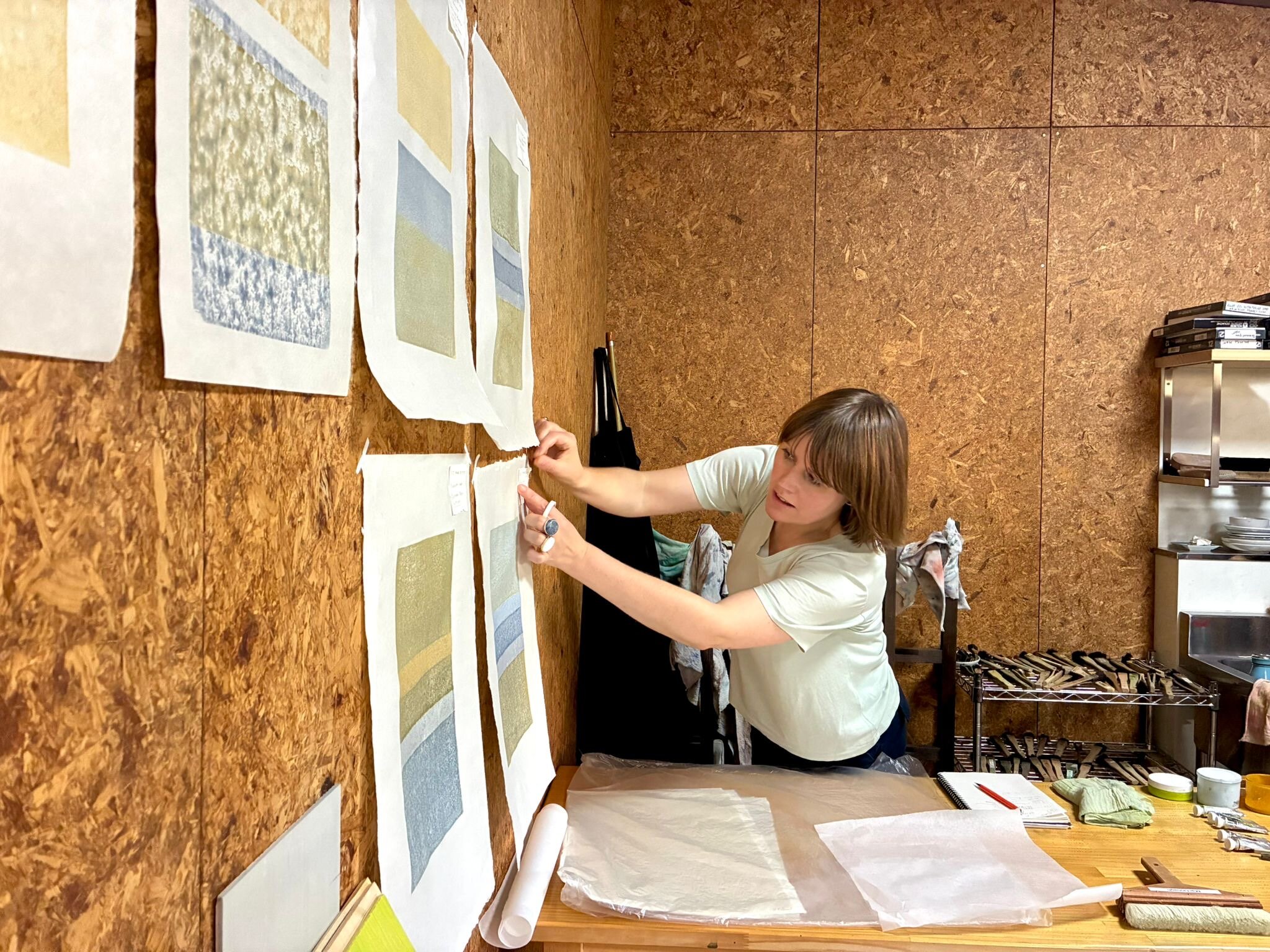
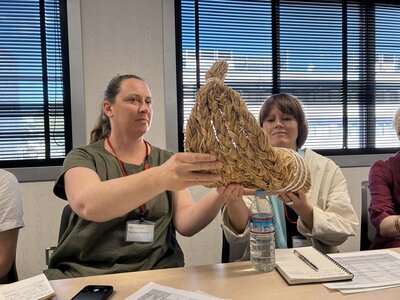
I did really enjoy being able to compare the three different print approaches. I thought if all of us had been trying to do it, it would have got a bit chaotic, but I think it was clever to pick three people with varied approaches and to see all the results laid out on the last day. I just felt that perhaps the different papers could have been better indicated because I found it difficult to tell which was which. That sort of finer detail of information was perhaps missing, but it was a great opportunity to get a gut feel for these papers that way.
Lucy May Schofield
I agree, I felt every piece of Washi needed to be marked in Japanese and in English. Yuasa san was the only person who managed to do that. I wish more time had been given to have that happen, so that maybe Miho or Travis could have made sure that there was good translation in Japanese and in English of where each of those papers were from. I would also have liked more time on that last day to really touch the Washi and inspect the prints closely. The ukiyo-e was beautiful to see printed, but it's not so relevant to the way I make work. Seeing Katsu and Kate print was very useful to me as contemporary interpretations of using mokuhanga.
Natasha Norman
Mia, how did you cope with the Japanese-English translation? Lucy and I discussed how we wish the Japanese speakers had paused ever so slightly just to allow translation to happen. How did you navigate it as someone who speaks English and Japanese but neither of which are your first language?
Mia O
Well, both English and Japanese are my second languages. Listening to Japanese is a bit easier for me than English, so I tried to focus on Japanese first. But when I couldn't catch everything, I'd switch to listening to the English -- though the translation often came a bit out of sync with the speaker, so I couldn't fully follow that either. It was quite hard to catch all the details. I actually recorded some of the talks, so I could listen again after I got home, and that really helped me understand a bit more.
Lucy May Schofield
I wish we'd had more time so that every speaker could have paused after a paragraph and then that could have been translated, because inevitably something was missed because the translator can't translate what's just been said and listen to what is currently being said and be ready to translate when they've finished the other translation, so it was challenging for them. I'm sure there's big gaps in our understanding but I am very grateful that there was translation there at all, but I just found the speed of the speakers very difficult to process. It was pretty tiring on the mind.
Natasha Norman
I was grateful there were two translators because you could listen to two different interpretations. I don't think it's easy to translate Japanese, it's quite a different way of thinking. But yeah, it was absolutely mentally exhausting because there were a lot of conversations. And although that was very stimulating, I think that's definitely something I think the organizers should address if they're going to have international people present.
Lucy May Schofield
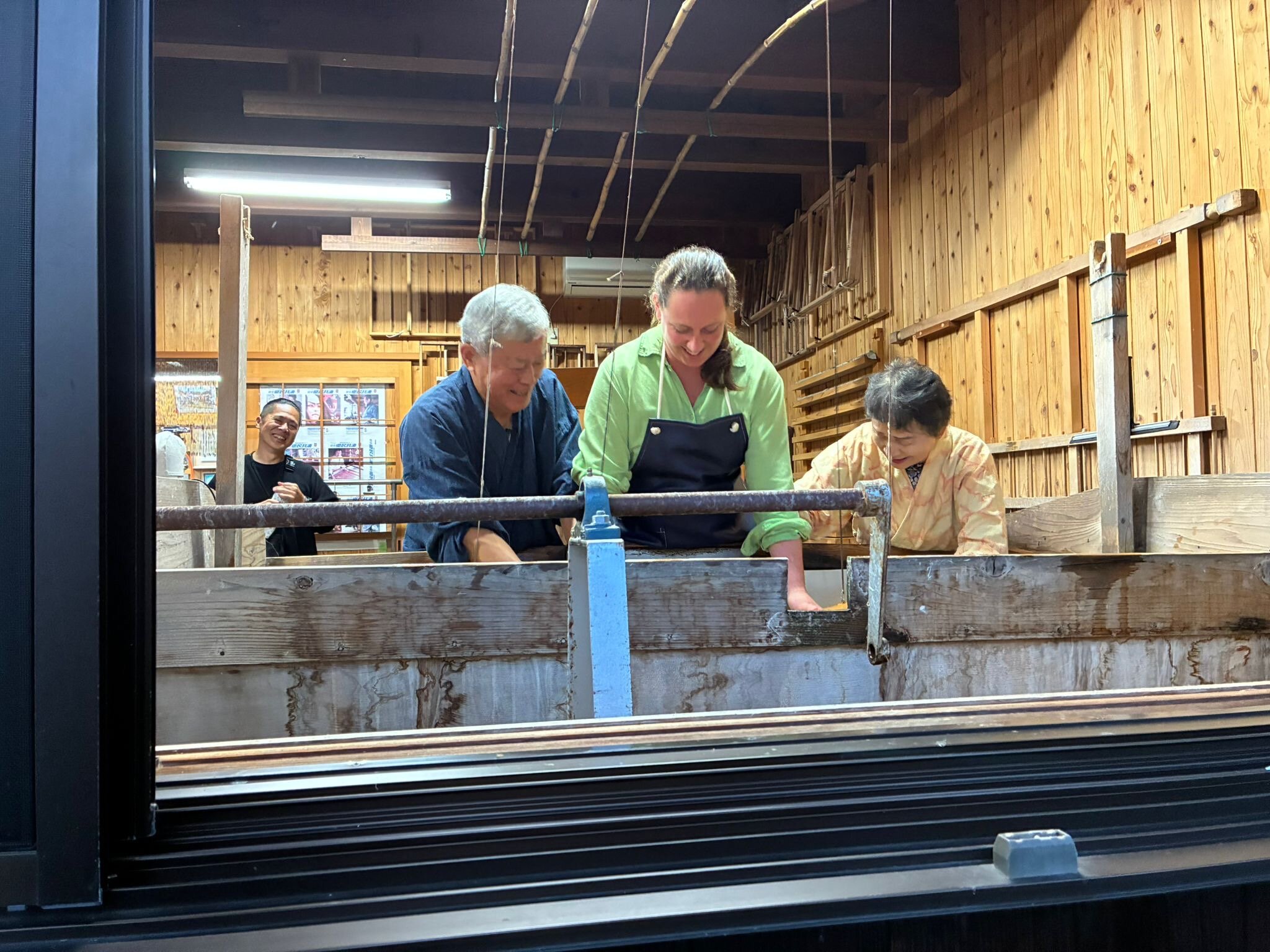
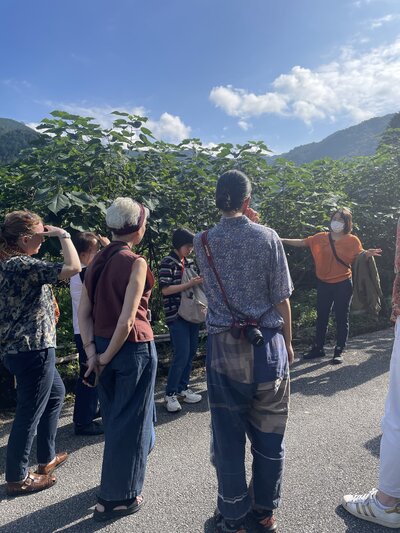
What I found really useful were the demonstrations, especially in Mino. In Mino, it was great to see the Washi producers go through the process slowly and silently, so that we were all speaking the same language of watching the process. I thought that was beautiful and that was more valuable in many ways than a lot of the words and the talks. Those talks were all fascinating, but to see, to have a first-hand view watching the beating of the fibres or removing the impurities or forming the sheet and the dance of the paper makers, that was very valuable for me.
Natasha Norman
In Mino and in Echizen, we were witnessing the process, and even if you're watching the same process, it's always done slightly differently. That becomes a way of really engaging with material process that is beyond language. I think you're right.
Lucy May Schofield
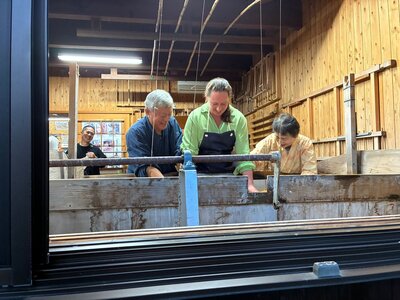
There was something about the way they set it up in Mino. There was a small space in both studios, but we all managed to get in there and quietly observe. And to be taken through the process, all the processes, especially the drying, to see that technique was so valuable. Watching Mr. Suzuki dry the sheets of very fine Mino washi, and then people being given the opportunity to try that, to have the experience of yielding this very fine piece of Washi. That was a real takeaway for me.
Natasha Norman
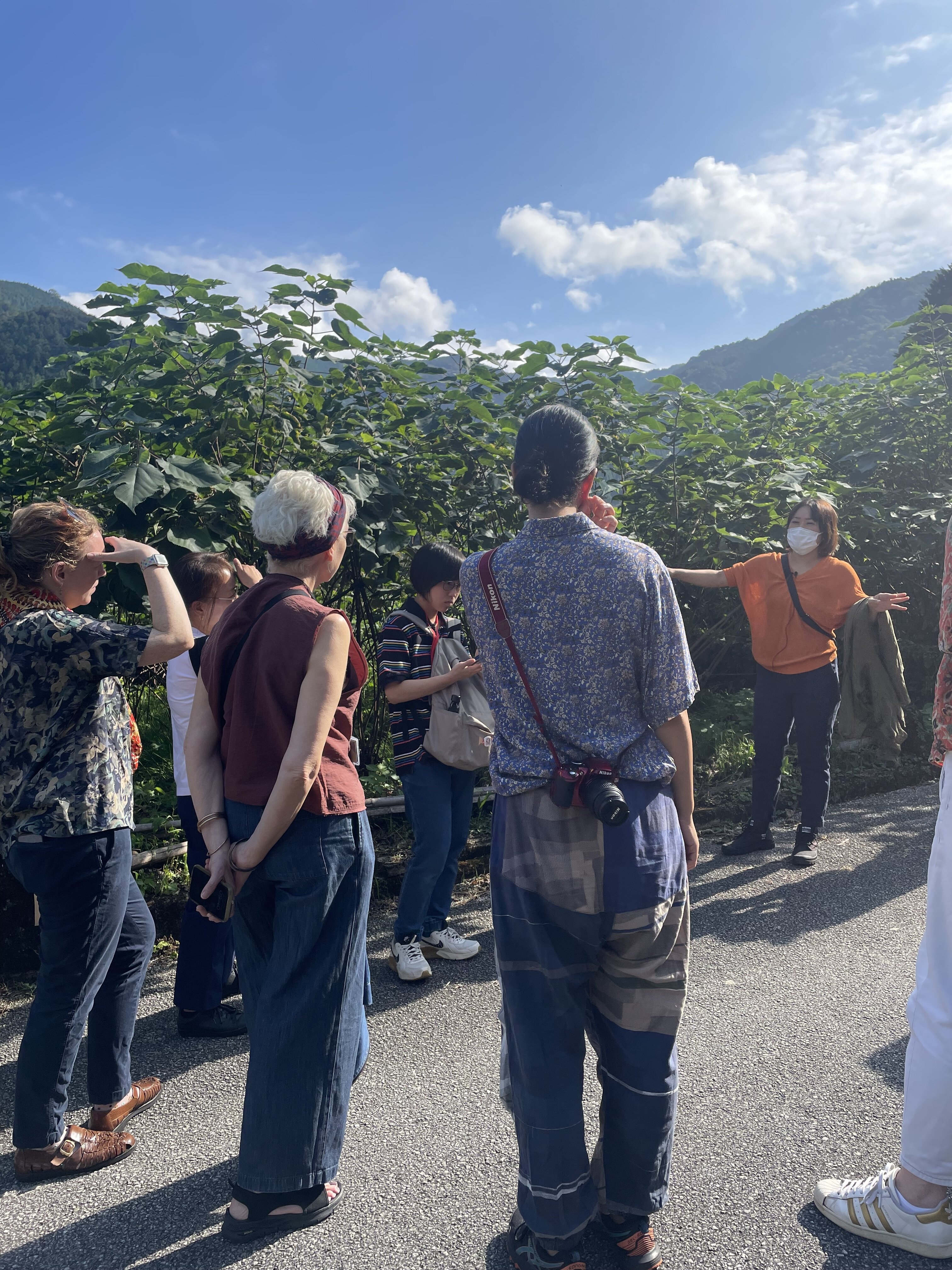
I really enjoyed the studio visits because you also get a sense of place. It was remarkable, in Echizen, to visit the living treasure's home. Something that came out from this Workshop for me is realizing how important place is to Washi making. It's very like wine making where place and climate is fundamental to the product.
Lucy May Schofield
Yes absolutely, and so wonderful to visit three very different regions. Equally I would say a really great thing about the workshop was the selection of the different types of participants. Everybody was coming from a different perspective. Everyone was a printmaker or a painter, but they were using Washi in different ways and had different needs. They were looking for different qualities in the Washi they want to use. So I thought that was excellent. It was a very complimentary group.
Natasha Norman
The diverse group also made sense in that, like some of the paper makers said, they developed their paper historically from working with a calligrapher, or they developed their paper working with a printer. So it was really nice to have that variety in the workshop participants because it meant that even as a group, we were all looking at the same product with a different idea of what that would become.
Natasha Norman
I was also so grateful for the dinners and the downtime, which I think is important. I think I really got to connect with people. It took a while to connect across the language barrier, but after a shared experience like that tuna dinner or the formal dinner in Mino, it broke the ice for us as a group, and then we could actually start talking. I thought the balance between the workshop and socialising that the programme curated was also quite good.
Lucy May Schofield
It could just have been longer. If we'd had more time to absorb and reflect on what we had seen and heard. Like Mia said, I have come away thinking, I don't know how that paper was cooked. Should I have asked about the price per sheet of that? or what the minimum order is? So many questions.
Mia, you were really great, even from the first session in Kochi, you were asking about the prices, switching business cards, making connections.
Mia O
I thought I'd be able to buy some paper there, even just a few sheets, but obviously I couldn't. At the same time, I guess I didn't really want to carry paper while traveling such a long distance. It was wonderful hearing the papermakers' stories and getting the chance to talk with them personally. But it was a bit of a pity that we had to rush to the next place, and there wasn't any price list for the washi. I think it's quite important to know the price -- we're not painters, after all. When I buy washi, I usually get at least ten or fifteen sheets for one project. I just wish there had been a price list next to each kind of washi.
Lucy May Schofield
And also, Mia, no one spoke about the price or the availability or how we go about placing an order. Maybe that wasn't appropriate for the tour. Do you remember in Kochi, after we were at Kashiki Paper, we then had the print tests, but we had Hiroshi Tamura-san and then we had Akari Katoka, I think. They were both Kochi papermakers, but because we hadn't been to their studios, I found it very difficult to connect with what they were describing about their washi. There wasn't much time to touch their paper, because we then watched the print demos. That first session of print tests I found confusing because we couldn't really sense the feel of the Washi that was then being tested. And I think there was a disconnect there. I know that Akari Katoka-san is up in the mountains and difficult to reach. But it would have been wonderful to have a slide presentation or something visual, even if they just did a very short introduction showing images of their farms or their plants or the way they make their washi to put it into context as we saw in Mino and Echizen.
Lucy May Schofield
I'm a very visual learner, so I can remember the paper from the people whose studios I saw, or paper I felt. But there's a little bit of a disconnect in Kochi. It was a bit of a blur to me, the qualities of that paper at the three paper mills.
Natasha Norman
Yeah, I think Kochi was a bit rushed, and I also felt because it was the beginning of the program, we were also trying to understand what we were doing. I think after Kochi, we were like, okay, this is what we're doing. And then we got a chance to decide for ourselves what it was we wanted to get out of the program. I think perhaps a bit more clarity on what the co-ordinator intentions were would have been helpful. It's not that I needed a prescribed idea, because I also like the open-endedness of the journey: where it was an experience and we could take what we wanted from it. But I think if we had just a little more information then we, with our own agendas, could have inserted ourselves into the experience more easily, instead of being left feeling, "oh I didn't catch all the information."
Mia O
Honestly, I can barely remember Kochi at all -- I was trying to figure out: was that the first day or the second day? It all kind of blends together. I guess what Natasha said makes sense -- we were really just trying to figure out what we were supposed to do. It was a bit confusing at the start. Yeah, I agree with her.
Lucy May Schofield
I only started looking at my notes yesterday. It took me half a day to type up the first day of lectures because I made such a lot of notes. So, I think I'll just keep doing that slowly and then what sticks with me is what will be useful.
Natasha Norman
Do you have any idea of what's sticking so far?
Lucy May Schofield
So far I'm thinking about ways in which we can share this knowledge. So I began by thinking about that in an academic way but it doesn't really serve me to write a paper because I'm not an academic. So I'll share the knowledge in my capacity as a teacher, of course, but I'm more interested in sharing it creatively, as an artist. I was talking to Kate MacDonagh and said that one of the things that I really felt was necessary for us as a group, as the Mokuhanga Sisters, is to embody this knowledge about different Washi and different regions and to look towards putting an exhibition together, possibly for the upcoming International Mokuhanga Conference or further into the future. I am interested in trying Washi from those three different regions with the same print. So the thought would be of having a Kochi Washi, a Mino Washi, an Echizen Wash, three different papers made from domestically grown kozo in Japan. We could each make an image that might define each of the ways that we work.
Lucy May Schofield
I'm interested in using the works produced as an educational exhibition to put together something that shows people outside of Japan the nuances in washi paper. Because what I've found since coming back to the UK is that so many mokuhanga artists are interested in what we have learnt and want to learn more. They are thankful for the sharing of the information and the photographs and have said that this is an amazing resource. People are really hungry for the information. But I think if you're like me, and a lot of artists are visual learners, then actually it's way more useful to see a gradation print, let's say, like an Atenashi Bokashi, or beta zuri etc on four different types of Washi. That's what's useful for me to make a considered choice about the qualities of each of those papers. So I'm really interested in doing something that would educate people outside of Japan in our communities about the nuanced differences and qualities of washi.
Natasha Norman
I think the experience has really taught me that choosing your Washi is a gut instinct. It's influenced by availability, by price, it's a choice that's impacted by a lot of factors. And I don't think one can ever find the perfect paper, but you eventually settle on a paper and take in all those subtleties, and then the job is to spend your life figuring it out.
Lucy May Schofield
Yes that's true and I just read a quote I took from Kate's talk on the washi tour. She said, there is so much to learn from Washi, from the Washi that we use. You could spend a lifetime exploring one Washi. There's so much choice, and you don't know when to stop exploring and develop a relationship with one kind of washi.
Natasha Norman
One way this Workshop really needs to develop is to become the dating site for Mokuhanga printers. We need to provide a space, both written and visual, where people can start to have a relationship with washi paper, to go on a date with it.
Lucy May Schofield
Exactly. Even just to be given that information about the differences of the paper. I would have loved to know 10 years ago about all the qualities and the differences that make up different Washi. I loved learning about the Udatsu Washi that we use. I always wondered why it was a little bit green and then to find out that they're using the sweet bark. They're not excluding the greenish inner bark from the whiter fibres, which is why you get this gorgeous greenish tonal quality. For me, that's great information to tell people that buy prints of mine about that paper. I want to know that paper like a partner, I want to know it intimately in order to do it justice. It's like Elenor Ling said, she was so thrilled with Fujita-san's presentation and the way that he was so transparent about all the qualities, all of the processes involved in his art making from the kozo, from Ibaraki, going and helping the harvest and steaming of the kozo. He's so wonderfully invested in the materials and processes. Elenor said, for a curator or an archivist, it is golden to be given all of that information. And I just think it makes us better artists to have all of that knowledge of where the kozo is grown, what part of the kozo plant is used, who's making it, the name of the paper maker, the area, the way it's cooked, how it's dried, what it's dried on.
Natasha Norman
Well, I think what that information has done is it's really challenged my artistic approach. Even though I'm operating from Africa, art is still taught in a Western conceptual framework, where paper is just a substrate. It's just a thing that you buy from the shop. There's too much importance put on the final image. But something I've always admired about Japan, and for me was really brought out in this Workshop, was that it's the relationship between those materials that is important.. So like you say, learning, being given the chance to find out more information about paper, furthering your relationship with paper, it's going to just further the subtlety and conceptual underpinnings of my practice going forward. Now, more than ever, I cannot just look at paper as a substrate. It is an integral part of an image-making process for me as a printmaker. And I think this Workshop really gave me insight in an experiential way. Paper is not just a thing that takes the ink, it's an integral part of the art-making process.
Lucy May Schofield
Absolutely and I'm so interested in the integrity of my pigments and I'm so interested in the integrity of the paper I'm using because it enables a deeper connection with the work that I'm making. It also engages whoever's looking at the work with greater intrigue because of that relationship. I'd love to be sourcing the right Washi for the right job every time but you can't always do that. What this has taught me is that actually, for me, spiritually, that connection with the paper is intrinsic to the process of making art. Mia and I were talking about this in Kochi. While we were talking to the papermakers, particularly Hiroshi Tamura, we both had the same feeling about his energy. He had this complete warmth about him and we both commented that we'd love to try using his Washi because of the way he appeared as a person and his calm energy in the making of his washi. By meeting the actual makers or the farmers, it deepens the relationship between artists and their materials further, which only enhances the work we create.
Participant Biographies:
Lucy May Schofield is a Lincolnshire born artist, now working within the expansive landscape of rural Northumberland. A graduate of London College of Printing, she studied water-based woodcut and book arts at MI-LAB in 2015, while living in Japan. Her intuitive practice explores a somatic relationship to the earth within a palette of light and time, paper and print. She is deeply inspired by the temporal and transient nature of our impermanence and finds an affinity to these themes through the medium of Mokuhanga.
Mia O is a South Korean artist currently living and working in Tokyo, Japan. She earned her BFA in Fine Arts from Hong-ik University in Seoul, Korea, and later pursued an MFA in Painting at Pratt Institute in Brooklyn, USA. In 2003, She was introduced to the traditional Japanese art of Mokuhanga during her participation in the Nagasawa Art Park Artist-in-Residence program, managed by the Mokuhanga Innovation Laboratory. This experience profoundly influenced her artistic journey, leading her to incorporate Mokuhanga into her practice.
Natasha Norman is a South African visual artist that processes intuitive images of natural places in collaboration with hand-worked surfaces and materials. Her practice is print focused and greatly influenced by the two residencies she attended in Japan to develop her knowledge of Japanese woodblock printing (Mokuhanga). Natasha graduated with an MFA from UCT's Michaelis School of Fine Art in 2011 where she continues to teach in a part-time capacity.
Feedback Conversation